Every video has a moment when the viewer silently asks: is this what I thought it would be, and is it worth sticking around? That moment arrives fast. The opening of your video exists to answer that question with a confident yes.
The good news is that strong openings aren't a mystery or a matter of charisma. They follow a few dependable principles, and once you start noticing them in videos you love, you'll see them everywhere.
Confirm the click
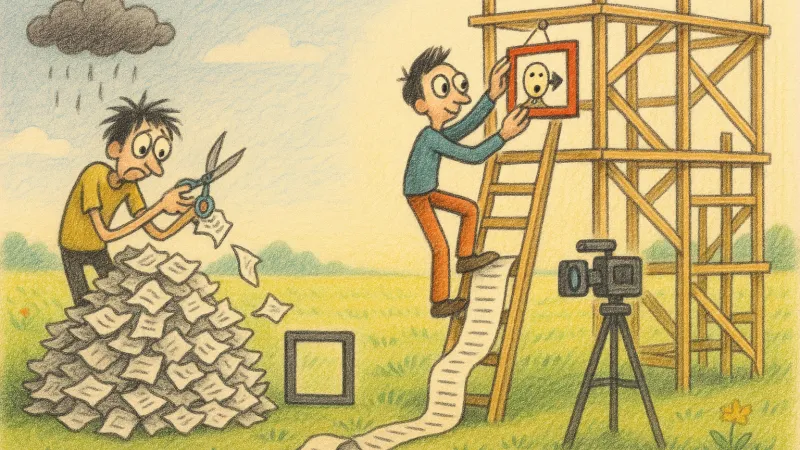
A viewer arrives carrying an expectation set by your title and thumbnail. The first job of your opening is to confirm that expectation immediately. If the thumbnail showed a flooded basement, the first shot should probably be that flooded basement, not your intro animation, not a sponsor read, and not you saying hello.
When the opening matches the package, the viewer relaxes. When it doesn't, they start wondering whether they've been misled, and a wondering viewer is one tap away from leaving.
Make a payoff promise
After confirming the click, tell the viewer what they'll get if they stay. This is the payoff promise, and it works best when it's specific.
- Weak: "Today we're talking about sourdough."
- Stronger: "By the end of this, you'll know the one change that took my loaves from flat to tall, and it costs nothing."
The stronger version gives the viewer a reason to keep watching and a sense of where the video is going. It also creates a small open loop: they want to know what that one change is.
Confirm the click, promise the payoff, then get moving.
Cut the preamble
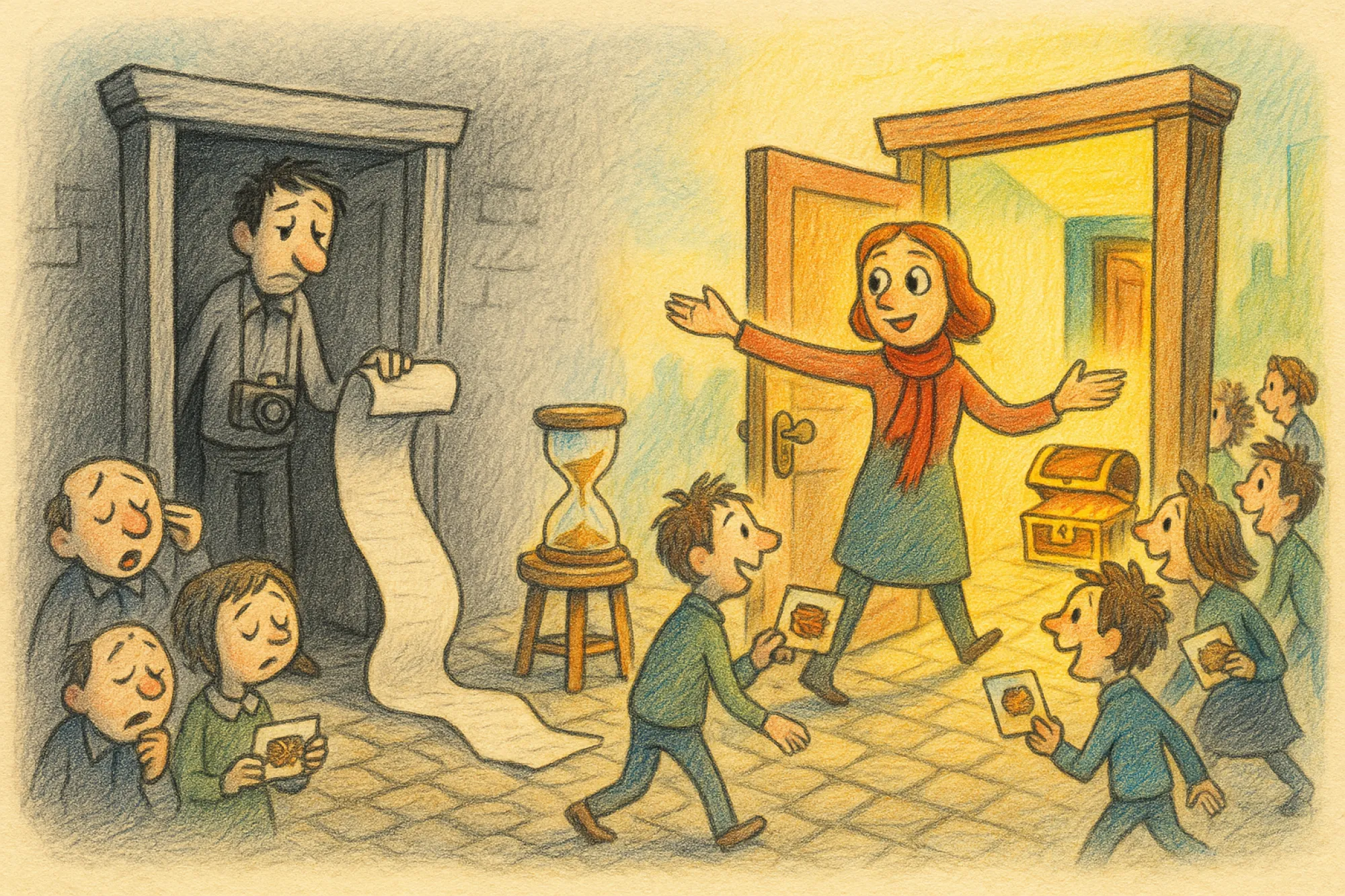
Most weak openings aren't bad because of what they contain; they're bad because of what delays the good stuff. Common culprits:
- Long greetings and channel introductions
- Asking viewers to subscribe before you've given them anything
- Explaining why you decided to make the video
- Backstory that could be woven in later
- Logo stings and slow title sequences
None of these are forbidden forever. A quick, familiar greeting can be part of your personality, and context matters. But each second of preamble is a second in which the viewer hasn't been given a reason to stay. Try this test: watch your opening and ask, at every sentence, "would the video be worse without this?" If not, cut it or move it.
Hook types worth knowing
There are many ways to open a video well. A few reliable patterns:
- The cold open. Start in the middle of the most interesting moment, then rewind. Say you're restoring a vintage camera: open on the moment the shutter fires for the first time, then cut back to the dusty box it arrived in.
- The question. Pose the exact question the viewer has, then promise to answer it. "Is it actually cheaper to cook every meal at home for a month? Let's find out."
- The stakes. Show what could go wrong. "If this glaze doesn't fire right, I lose three weeks of work."
- The result first. Show the finished product, then explain how you got there. This works especially well for tutorials and transformations.
- The contrarian line. Open with a claim that challenges a common assumption, as long as you can genuinely back it up later.
Pace and energy
Openings tend to benefit from slightly tighter pacing than the rest of the video. That doesn't mean frantic jump cuts or shouting. It means no dead air, no fumbling, and visuals that change often enough to feel alive. If you're speaking to camera, consider recording your opening last, after you've warmed up and know exactly what the video delivers.
On short-form platforms, the window is even tighter. The first frame and the first spoken line carry most of the weight, so open with motion, a clear subject, and words that state the premise right away. Text on screen can help viewers who are watching with the sound off.
Don't write checks the video can't cash
A strong hook raises expectations, and the rest of the video has to meet them. If you promise "the one change that fixes flat bread," that change had better be in the video, clearly explained, and not buried after twelve minutes of filler. Viewers who feel strung along stop trusting your openings, which makes every future hook weaker.
A good rule: deliver the payoff at a natural point, not artificially late. You can keep attention through the middle with smaller payoffs and new questions instead of withholding the main one.
Use your retention data
Most platforms show you how many viewers are still watching at each moment. Look closely at the opening portion of that graph across several videos. Where does the steepest drop happen? Is it during a greeting, a sponsor read, a slow establishing shot? Patterns across videos are more telling than any single upload. Adjust, test, and compare.
A quick checklist
- Does the first shot match the thumbnail and title?
- Is there a specific payoff promise early on?
- Have you cut every line that doesn't earn its place?
- Would someone with the sound off understand the premise?
- Does the rest of the video keep the promise?
Get those right and your opening stops being a hurdle and starts doing what it should: inviting people in.