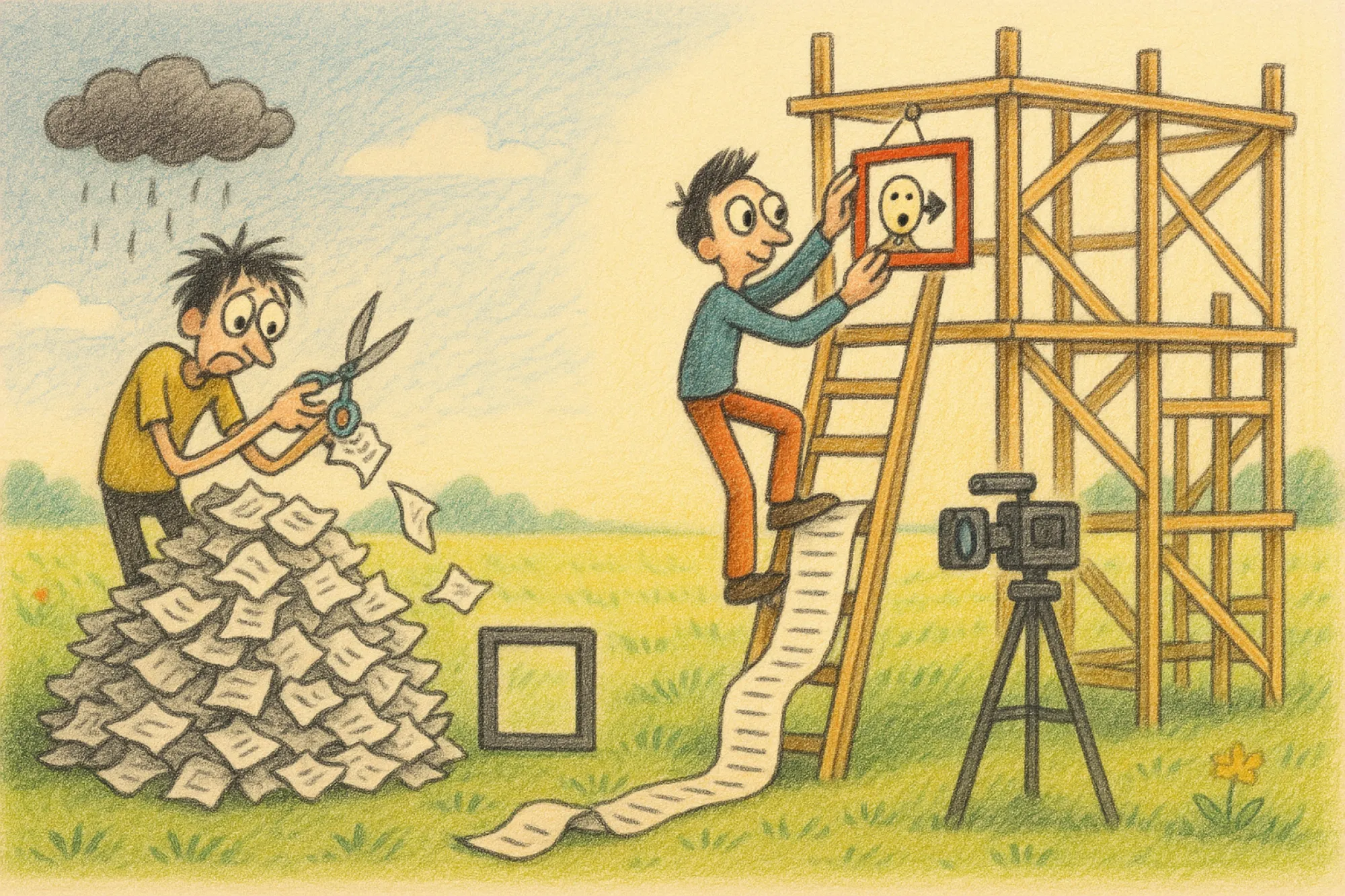
Most creators make videos in the order that feels natural: have an idea, write or outline it, film it, edit it, and then, usually late at night with an upload deadline looming, figure out what to call it and what to put on the thumbnail. It's an understandable workflow. It is also backwards.
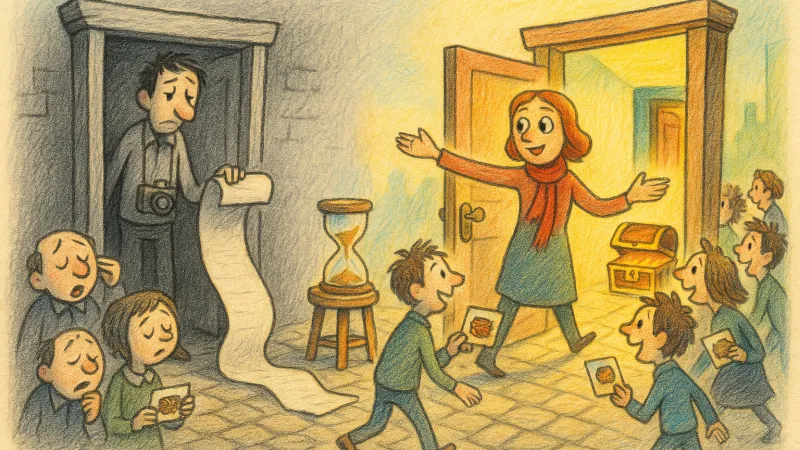
The title and thumbnail are the only parts of your video that a potential viewer sees before deciding whether to give you their time. They are the front door. Packaging-first planning simply means designing the front door before you build the house, so that everything behind it delivers on what the door promised.
Why the package comes first
When you write the title and sketch the thumbnail at the idea stage, you're forced to answer the hardest question early: why would a stranger click this? Not a subscriber who already likes you, but someone scrolling past a dozen other options. If you can't answer that question in a few words and one clear image, the idea probably isn't ready. Better to find that out before a weekend of filming than after.
The package also becomes a brief for the rest of the production. A title like "I tested every budget microphone at my local electronics store" tells you what the video must show, what the climax is, and roughly how it should be structured. A vague working title like "Mic video" tells you nothing.
The package is a promise. The video's job is to keep it.
A simple packaging-first routine
- Write ten titles, not one. Your first idea is rarely your best. Push through the obvious versions and you'll often find a sharper angle, a clearer stakes line, or a more specific hook.
- Sketch three thumbnails. Stick figures on paper are fine. You're testing whether the concept can be understood at a glance, not making art.
- Pair them up. The title and thumbnail should work together without repeating each other. If the thumbnail shows a burned cake, the title doesn't need to say "burned cake"; it can add the context, like "What went wrong with my first wedding commission."
- Show a friend for two seconds. Hold up the sketch and the title, then take them away. Ask what the video is about and whether they'd watch it. If they can't tell you, keep iterating.
- Only then outline the video. Write the outline as a delivery plan for the promise you just made.
What makes a package work
There's no universal formula, and anything that claims to be one will age quickly. But a few principles hold up across niches.
- One idea per thumbnail. A single focal point, readable at the size of a postage stamp, beats a busy collage. Squint at it on your phone. If the main subject disappears, simplify.
- Curiosity with clarity. The best packages open a question the viewer genuinely wants answered while still making clear what kind of video it is. Mystery without clarity reads as confusing; clarity without curiosity reads as homework.
- Specificity. "How I organize my studio" is fine. "The $40 shelf that fixed my cluttered studio" is more concrete, more visual, and easier to picture. Specific details signal that there's real substance inside.
- Honesty. Overpromising might win the click, but viewers who feel tricked leave early and remember your name for the wrong reasons. A package should be the most compelling true description of the video.
Let the package shape the edit
Once you know the promise, you know what to cut. Say your title is "Can a beginner restore this rusted bike in one weekend?" Everything that moves that question forward stays. A ten-minute tangent about your favorite podcast does not, however charming it felt in the moment. The viewer clicked to find out whether the bike gets restored, so the edit should keep that question alive and answer it clearly.
This also helps with your opening. If the package promised a transformation, show a flash of the before and the stakes in the first moments. Viewers arriving from the thumbnail should immediately feel they're in the right place.
Killing ideas is a feature
One of the quiet benefits of this approach is that it gives you permission to drop ideas cheaply. If you've spent twenty minutes trying to package a concept and nothing clicks, that's useful information. Park it in a "maybe later" list. Sometimes a better angle arrives weeks afterward; sometimes you realize the idea was really for you, not your audience, and that's fine too.
Keep a running document of packages, not just ideas. When you sit down to plan your next video, you'll be choosing between finished front doors rather than vague notions, and that's a much easier decision to make.
Revisit after publishing
Packaging isn't permanent. If a video is underperforming relative to your usual results, it's often worth testing a new title or thumbnail, and some platforms offer built-in tools for comparing options; check your platform's current help pages for what's available. Treat every upload as a lesson in what your audience responds to, and fold those lessons back into the next round of ten titles.
The script will always matter. But it only gets its chance if someone presses play.