I said it was imminent. It took weeks
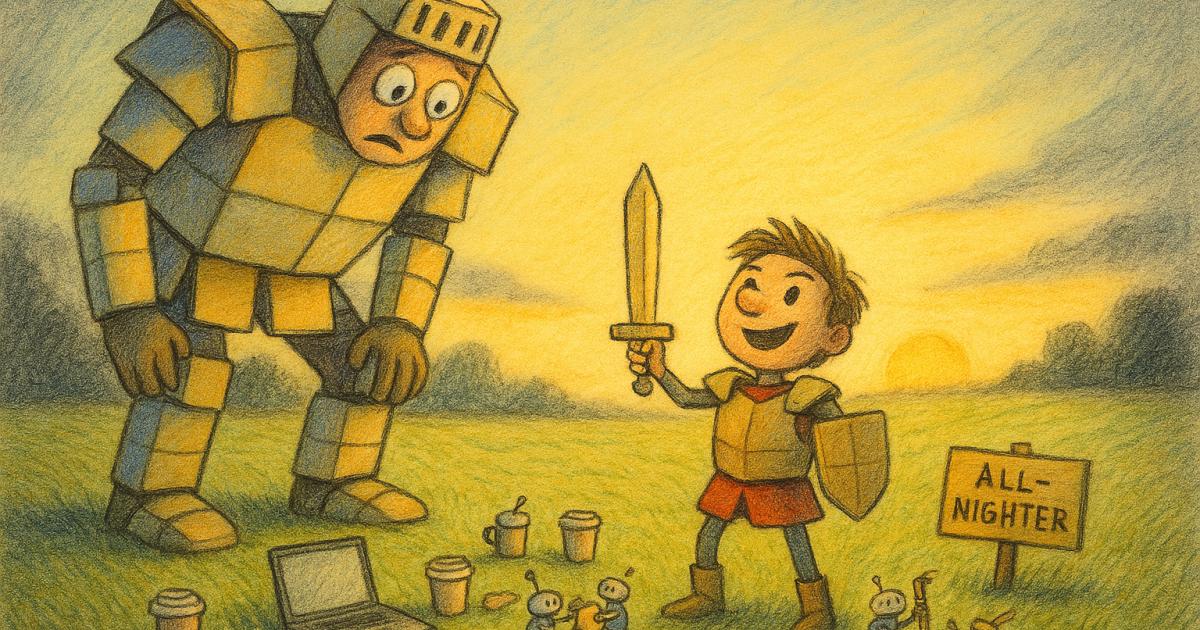
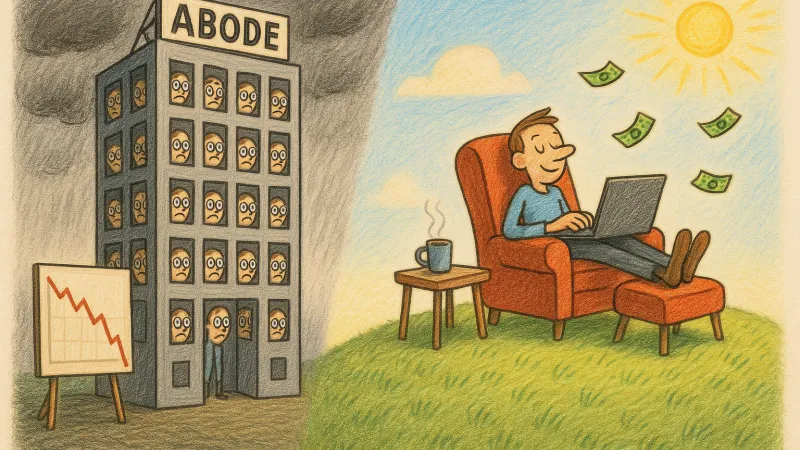
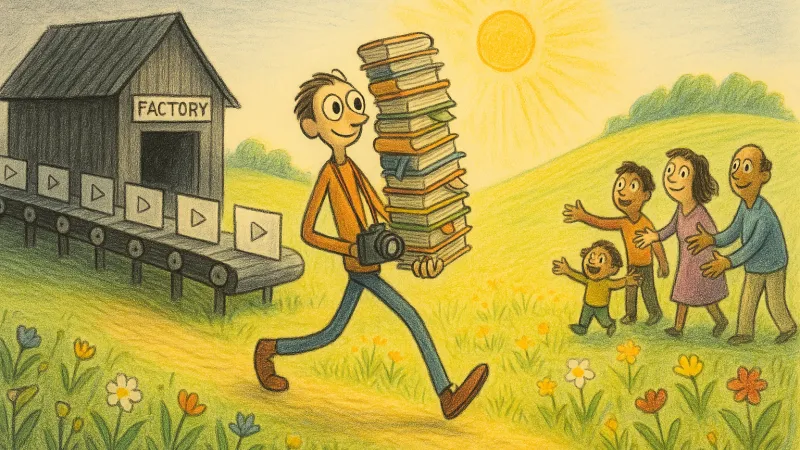
In my last piece, The era of giant software subscriptions is ending, and small teams are why, I argued that skilled developers with a legion of coding agents could take on the Goliath SaaS tools. I said graphic suites and video editing software were the part of a creator's stack most at risk. I called it imminent. It took weeks.
ArtCraft has released free, open-source rebuilds of seven Adobe Creative Cloud apps. No surprise at all. It's literally what we predicted.
Two details first. It isn't quite a solo effort: founder Brandon Thomas insists it has a team behind it. And it's alpha software, meaning early and unfinished. Thomas says he wrote it in Rust, a programming language, using Anthropic's Claude Opus 5.5.
What ArtCraft is, and what I found
The seven apps are PhotoCraft (Photoshop), VectorCraft (Illustrator), FilmCraft (Premiere Pro), LightCraft (Lightroom, not Classic), EffectCraft (After Effects), DesignCraft (InDesign) and an Acrobat alternative named PdfCraft on GitHub, though some reports call it PrintCraft. They run on macOS, Windows and Linux, and in a web browser.
Thomas's motive will sound familiar. "They charged me the 'cancellation fee' on multiple occasions and I've hated them ever since," he wrote on Reddit. In March, Adobe agreed to settle a 2024 Justice Department and FTC lawsuit over those fees, paying $75 million and providing $75 million in free services while denying wrongdoing, Engadget reported. Cancelling an "annual plan, paid monthly" after the first 14 days still costs you a hefty fee.
Yes, I've tried it. It works remarkably well. It has rough edges, but it's essentially two weeks old. It won't stay in early testing for long. Others found the same: one early tester called PhotoCraft "just… Photoshop", then found gaussian blur didn't work.
Free Adobe was never the story
There have always been alternatives to mainline software. Microsoft's software has long had free open-source rivals, and so has Adobe's suite. Photoshop users already have GIMP, Krita, Photopea and Affinity; video editors have DaVinci Resolve and Final Cut Pro.
Look at the web itself. More than half of all websites run on free, open-source web servers such as Nginx and Apache, mostly on Linux; Microsoft's own web server, IIS, is down to about 3%. Yet Windows Server is still part of a Microsoft server and cloud business that brought in $129 billion last year. Free has never been the thing that kills paid.
Adobe outlasted all of them, because when you lock into an ecosystem you don't just lock into the tools. You lock into the support, the community, all of that.
My team stopped using Adobe because of its practices and switched to alternatives. It can be done. But a lot of people are locked in, and a one-to-one replacement that looks and behaves like what they already know, for free, could change things for them. That seems to be the pitch. It isn't the big story.
What still protects Adobe
The best case for Adobe comes from ArtCraft's own documentation, and credit to the team for being honest. The FilmCraft README rates the app at about 86% of Premiere Pro's feature breadth but only about 56% "ready for real work". It can't open Premiere project files (.prproj), so sequences have to come over as FCP7 XML, AAF or OTIO. It hosts no plug-ins. There's no AV1 export. Real camera and phone footage is less tested, and Windows and Linux get far less testing than macOS.
The PhotoCraft README claims real ICC colour management, including soft proofing, and says re-saving keeps the render of 307 of 309 PSD test files. It still says plainly that it "is not yet a Photoshop replacement for daily professional work", naming gaps in AI features, 15 missing tools, typography, pro workflows and plug-in compatibility.
That's the moat: workflows, plug-ins, colour management, file formats, trust and years of refinement. And companies may be reluctant to adopt an untested clone.
The clean-room question nobody has answered
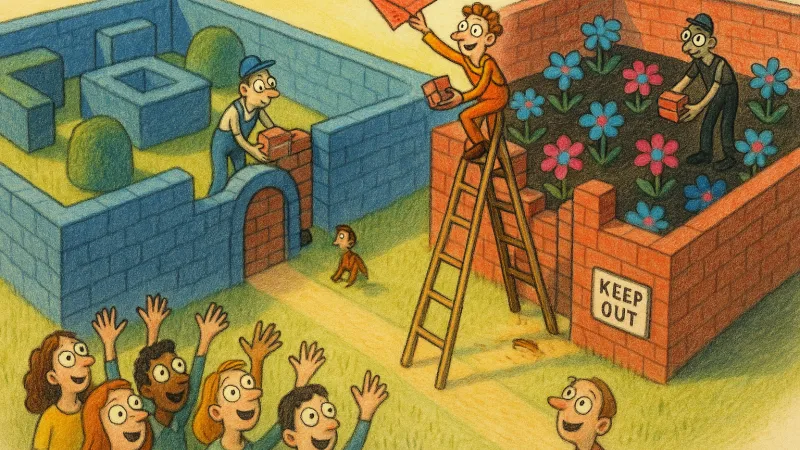
A clean-room reimplementation means rebuilding software from public specifications and observed behaviour without copying the original code. PhotoCraft says it was built from "public specs and observed behaviour only. No proprietary code, shaders or assets." So far, that rests on the project's own word.
Copyright isn't the only issue. Patents can cover how a tool works or looks, and Adobe holds thousands of them. There's also a theory doing the rounds that the apps were built by decompiling Adobe's software, which would generally break Adobe's licence terms. That's speculation, and nobody has confirmed it.
In the coverage I've seen, Adobe hasn't said anything, and nobody has published expert legal analysis. Treat the legal status as open.
The sceptics' case, and where I dig in
The sceptics say an alpha clone is a demo, not a threat. Thomas's "software is over" claim is a stretch, they argue: writing code is one thing, polishing and supporting it for years is another. One Adobe-using editor says Lightroom and Photoshop have features he uses all the time that competitors lack. Early users have reported problems with basic functionality, and Thomas has walked back "100% parity within a month" to 99% parity in months rather than years.
All fair. I still don't agree with them, and the reason is speed. The apps debuted and shipped several new releases within a week. When we checked PhotoCraft on 11 October, it had about 43,000 GitHub stars and 1,338 commits. Something took Adobe millions of dollars, hundreds of developers and years of development, and a small team has rebuilt much of its surface in weeks. That's the story.
The big but: nearly done isn't done done
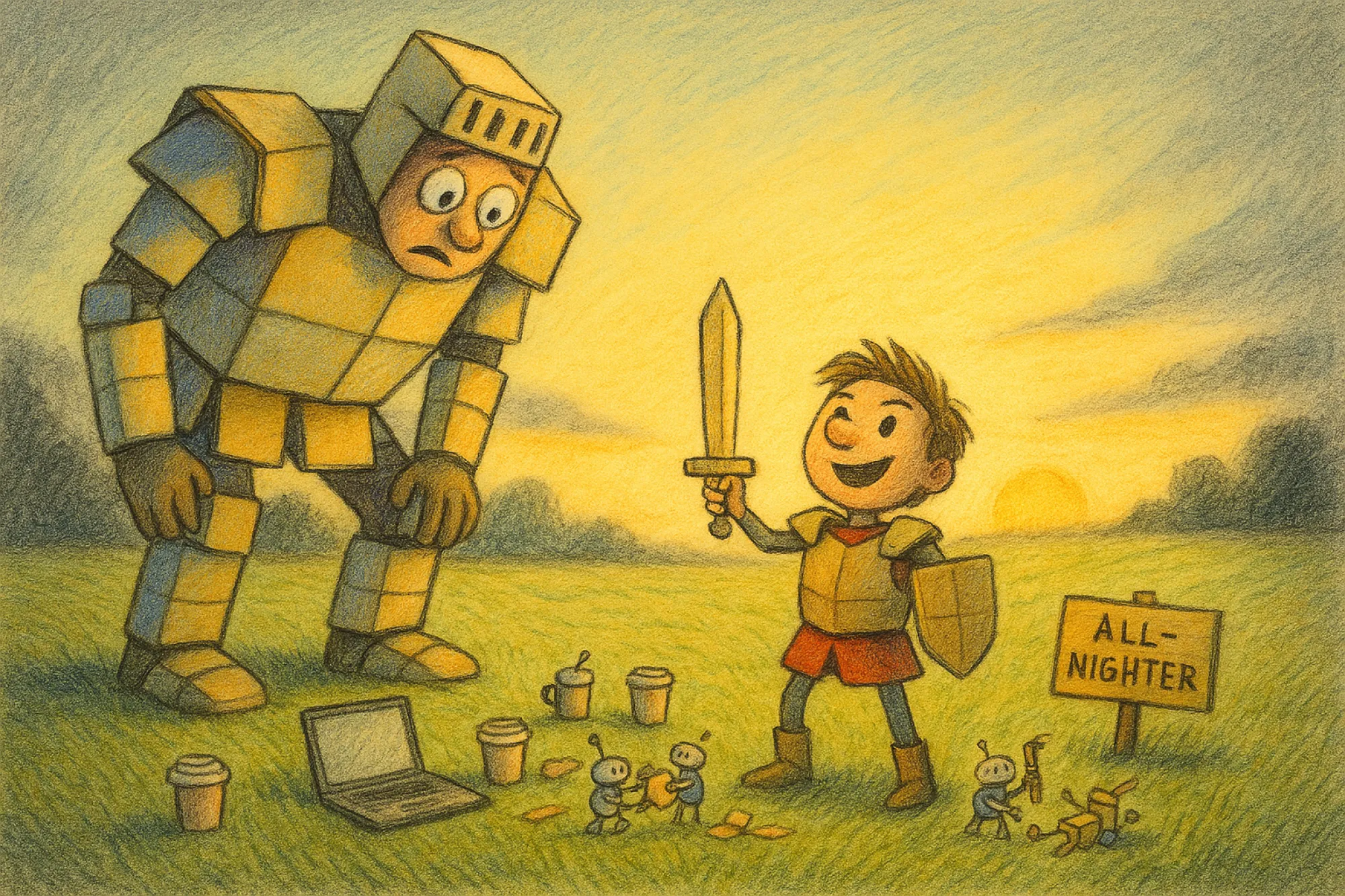
There is a caveat, and I want to be honest about it. Getting software to nearly done is almost infinitely faster than getting it to done done. Done done is an often fluid term for software that's completely ready for production use, ready for mainstream and paying users. Even then, done done often has a long patch and bug-fixing phase after release. I can't overstate that.
In the world of AI, things look polished, slick and ready in almost no time. But the real work comes in the polish, the fine-tuning, the hands-on human stuff that AI has a hard time getting just right.
ArtCraft's own numbers show it. FilmCraft puts itself at about 86% of Premiere Pro's features but only about 56% ready for real work. That 30-point gap is the distance between nearly done and done done. Speed gets you to nearly done. It doesn't get you to done done.
None of that undoes my point. Getting this far, this fast, is the story. It just means the last stretch will take longer than the first, and the last stretch is the one that matters to anyone with a client deadline.
The speed cuts both ways
That speed is also the biggest danger. If there's no incentive to build frontline, bleeding-edge software because somebody can copy it and ship their own version five minutes later, will people stop building software? Or will it be built by people who do it for the love of it, not the money? That's a much bigger story, because it possibly changes everything.
I've always built open-source software and given a lot away because I enjoy it. I charge for my time when a company or client wants help coming up with ideas or building things. Nearly all my software is open source. But some of what I build I know will make money, sold as a service or a one-time licence, and I'm now less likely to build software to sell. I think that will be true of a lot of people. I still build open source. It will change the business.
Look at how ArtCraft pays its bills. Thomas says its separate business selling tokens for AI image and video models will help cover development, and there are optional subscriptions with AI credits. So it's "free" software funded by something other than software. That rather proves my point.
What to do with your subscription
Don't cancel anything yet. Don't rush. ArtCraft isn't ready for production use. Give people time to use it. Maybe not months, but there's no hurry: a lot of bugs won't be surface level and will only show up in deep testing. That's the done-done phase, and nobody gets to skip it.
If you want to try it, use non-client work. Be wary of running unaudited AI-generated code on your main machine; Windows Sandbox, a built-in virtual machine, is one way to test safely. And remember that with open source, you are the support desk. FilmCraft's own README says bug reports with real footage are the most useful thing you can send.
Before you cancel anything, check your plan's early termination terms. Then watch for these signals:
- The apps moving from alpha to beta.
- FilmCraft opening .prproj files.
- Plug-in hosting arriving.
- FilmCraft's "ready for real work" figure climbing well past 56%.
- Releases settling down: fewer fixes for basic functionality, not just more features.
- Any response from Adobe, legal or on price.
When those start ticking over, it's time to look at moving real work. Nearly done will arrive first. Wait for done done.
Sources
- W3Techs: web server usage
- GeekWire: Microsoft's businesses in its FY2026 filing
- The Tube: The era of giant software subscriptions is ending, and small teams are why
- GitHub: storytold/filmcraft README
- GitHub: storytold/photocraft README
- Phoronix
- TechSpot
- PetaPixel
- Design Week
- Android Headlines
- Cybernews
- Engadget
- Notebookcheck