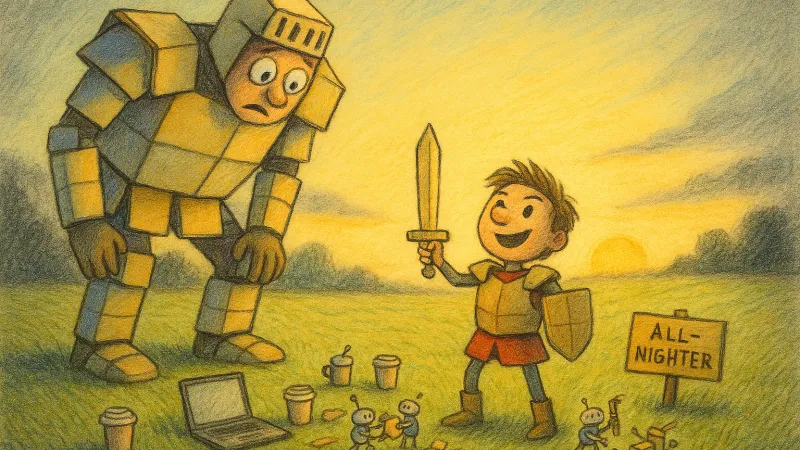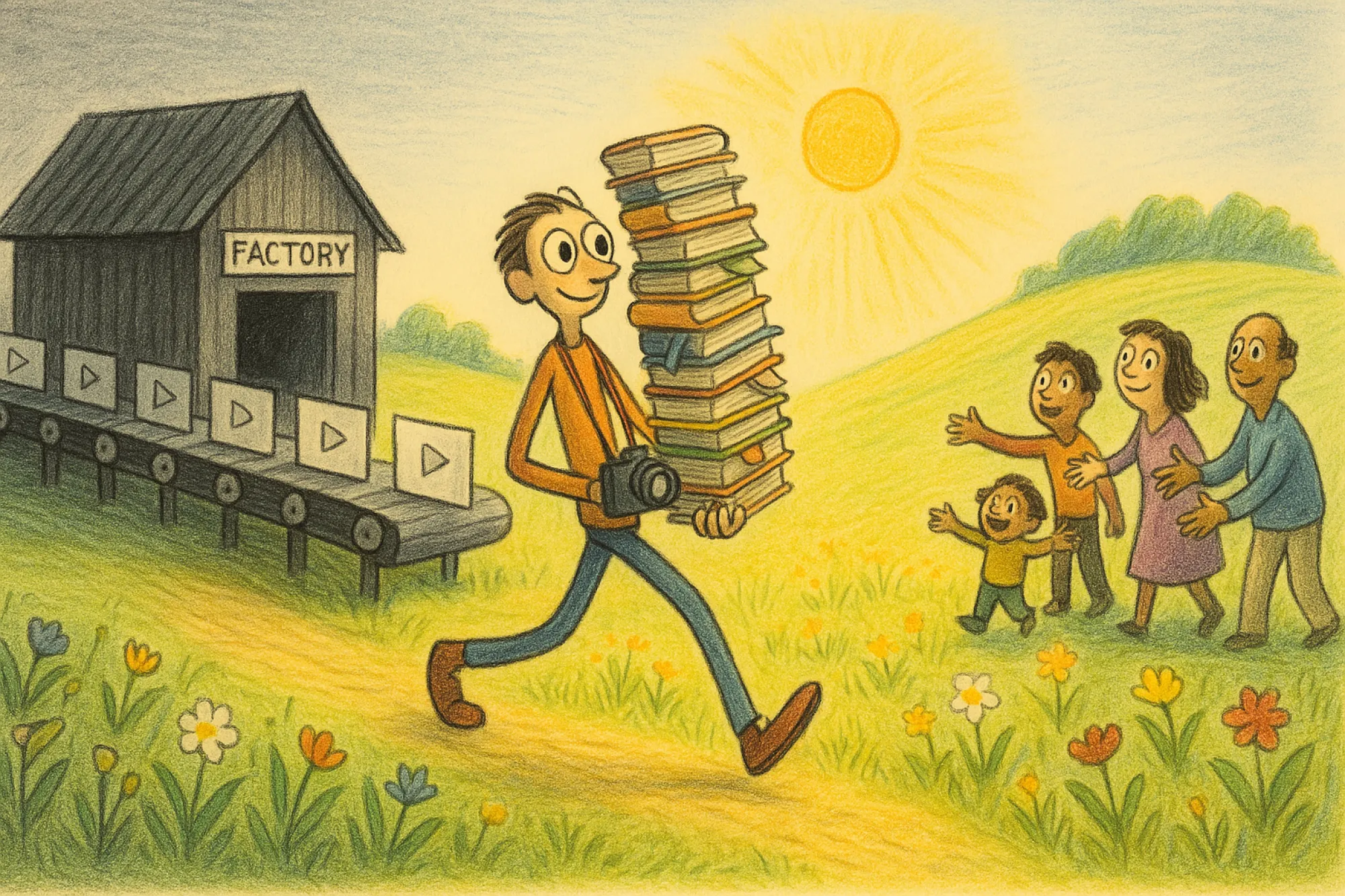
Two kinds of news landed in creator-land this week. One is about feeds: Meta is testing versions of Facebook and Instagram that open straight into full-screen video. The other is about people: several YouTubers are being rewarded, with funding, production deals or simply attention, for knowing one subject unusually well. Read together, they hint at where durable value may sit as every app starts to look the same.
Feeds are filling up
Meta is testing versions of Facebook and Instagram that open straight into full-screen video (we covered the details here). The audience for that video is mostly watching, not making: The Verge cites Morning Consult polling in which 81 percent of US respondents had watched a Reel but only 39 percent had posted one, a gap it argues partly explains why platforms tolerate AI-generated filler, often called "AI slop."
Meanwhile, depth is getting paid
Against that backdrop, the creator stories this week share a common feature: the people involved are valued less for volume than for expertise.
Tubefilter reports that YouTube and Google.org, Google's charitable arm, are giving $2.5 million in grant funding to Class CrunchLabs, Mark Rober's free science curriculum for grades three to eight. Per Tubefilter, Rober committed $55 million to the project, consulted the National Science Teaching Association on standards, and the curriculum of more than 1,000 videos was ready for the 2026-27 school year. The grant will fund translation into more languages, further research, and keeping the lessons free.
In another Tubefilter story, MoistCr1TiKaL (Charlie White) is partnering with Lyrical Animation and developer Jagex to adapt the online game RuneScape as an animated series, producing through his company Meatier Productions. Lyrical is also behind the Jacksepticeye-produced Bloodborne film. Tubefilter frames both creators as fan "loremasters" who help keep adaptations faithful to the source world, rather than as hired faces.
On a smaller scale, PetaPixel covered Barny Dillarstone's project dropping cameras into the Thames docks and upstream waters. He filmed invasive signal crayfish and a Chinese mitten crab, then tested whether his infrared lights were scaring off large fish, before eventually capturing a big barbel at night. It is the kind of patient, method-driven video that is hard to fake or mass-produce.
What it means in practice
If Meta follows through, short vertical video may become the default way billions of people encounter content, and much of it may be cheap or automated. For YouTube creators, that probably raises the floor on competition for quick attention while doing little to raise its value.
This week's examples suggest a different route. Rober's grant, White's producer credits and Dillarstone's field work all rest on knowledge built over years. That kind of authority can open doors that sit outside any single feed: institutional funding, studio partnerships, licensing. It may also be a better hedge against platform redesigns than chasing format changes.
None of this means short-form is optional. Clips remain a discovery tool, and Meta's own ranking claims suggest platforms want to find quality early. But in practice, short-form may work best as a trailer for depth rather than a replacement for it.
What to watch
- Meta's rollout. Whether the full-screen tests expand beyond their current markets, and whether the hinted 2027 US expansion happens.
- Platform money for expertise. Whether YouTube's backing of Class CrunchLabs becomes a model for funding other educational creators.
- Creator-led adaptations. Jagex CEO Jon Bellamy called the RuneScape series "early days," per Tubefilter. Its progress, and the Bloodborne film's reception, will show how far studios lean on creator expertise.
Sources
- The Verge: Are you ready for everything to look like TikTok?
- Tubefilter: Mark Rober's Class CrunchLabs gets $2.5 million grant from YouTube and Google.org
- Tubefilter: Lyrical Animation taps MoistCr1TiKaL for RuneScape adaptation
- PetaPixel: YouTuber drops camera into London's River Thames, finds invasive species