We replaced a seven-figure agency
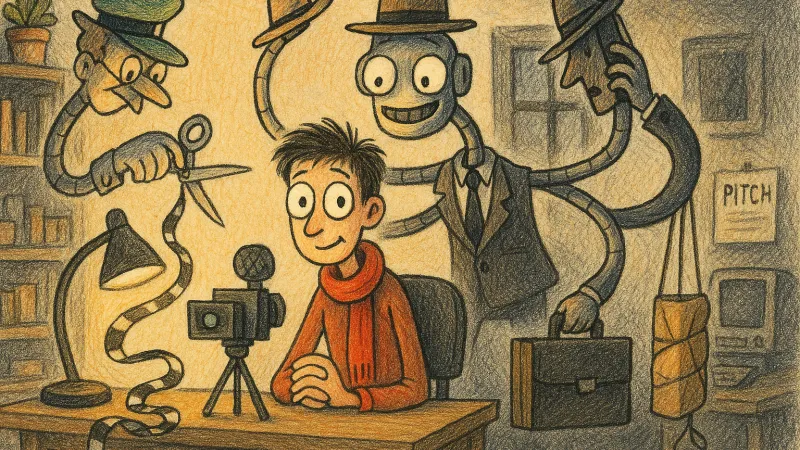
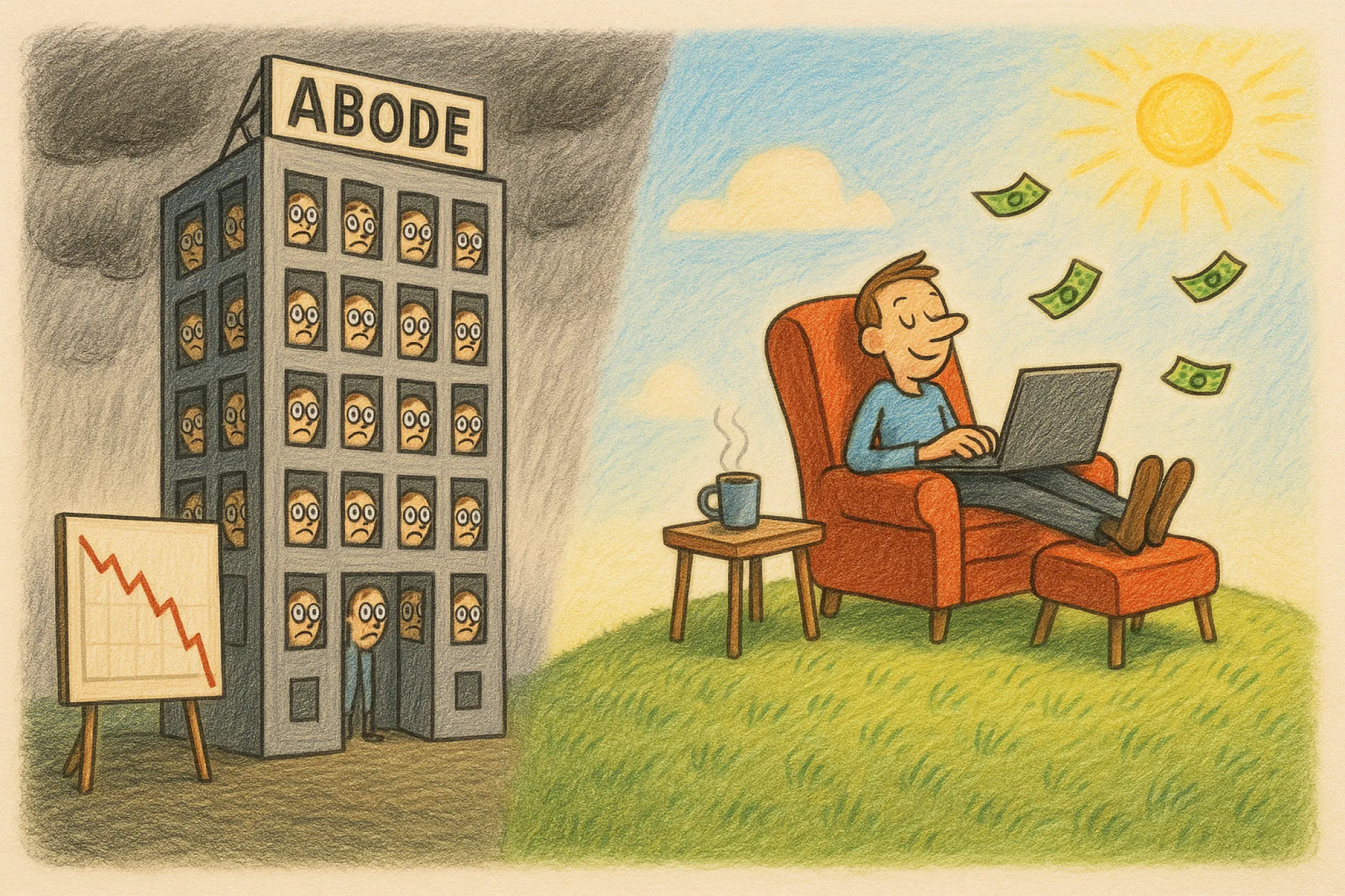
We just finished taking over a project from a gigantic agency. The client is a big one, and it had been spending seven figures a year with that agency. My small team has now replaced them completely, for about $200,000 a year. We give better, faster service without the excess ceremony and baggage that comes with big companies.
That project is why I think the time of the goliath SaaS tools is probably coming to an end. SaaS, or software-as-a-service, means the apps you rent by monthly or annual subscription. It is now so easy for a reasonably skilled software developer to build pretty good apps that size no longer protects the giants the way it used to. If you make video for a living, that includes the tools and subscriptions you rely on.
The view from the middle
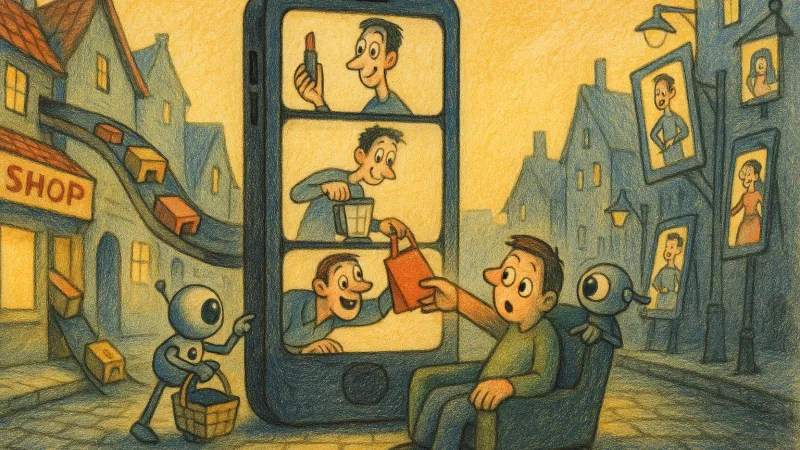
As a small software house, we sit in the middle. On one side, we see users vibe coding mock-ups. Vibe coding means describing the software you want to an AI tool and letting it generate a rough version. On the other side, we see clients on huge multi-million-pound contracts with big agencies charging a fortune.
What we can do is take those quick mock-ups and turn them into working software, fast, for something like a tenth of the price of the big agencies with their massive overheads.
In the past, the logic ran the other way: the agency costs millions a year, so it must be good. Now people are seeing how quickly they can make a mock-up with AI, and that a small dev team can take it the rest of the way. It's changing everything. The economy of scale is very quickly starting to become more like an albatross to the larger agencies.
The engine behind this is coding agents, AI tools that can write, test and revise code with relatively little hand-holding. A small team of experienced developers now has, quite literally, a legion of them at its fingertips.
Why your creative tools are next
If I had to pick the part of a creator's stack most at risk right now, it would be graphic suites and video editing software.
My reasoning is simple. Smaller companies can now do everything the big players do for a fraction of the overhead, and they can move much faster. When your costs are a handful of salaries rather than a corporate headquarters, you don't need to charge what the big players charge.
I'm not going to name products, because this is my view from my own work rather than something the data shows yet. It is too soon for reports to reflect such a rapidly changing landscape.
The markets panicked, then calmed down
The strongest evidence against me comes from the stock market. In February 2026, Anthropic unveiled advanced tools for its Claude AI agent, and investors panicked that AI could replicate software at a fraction of the cost. According to Zacks, the iShares software sector fund fell 24% in the first quarter, its worst performance since 2008. The sell-off, nicknamed the "SaaSpocalypse", erased $1 trillion in market value from software stocks.
Then it reversed. Zacks says the sell-off ended in June as earnings came in. Salesforce reported 11% revenue growth in its second fiscal quarter and ServiceNow beat expectations. By September, Zacks was calling the SaaSpocalypse "officially over." It is worth knowing that this is an investor-focused article that recommends funds to buy.
My answer is that share prices track what big companies report, and those reports lag what I'm seeing on the ground. A big vendor posting solid revenue this year tells you it still has customers. It doesn't tell you whether small teams are quietly taking work that used to go to the giants, which is exactly what happened with our client.
Even Zacks concedes that "this isn't a return to the pre-AI status quo." It also describes the recovery as uneven, noting that HubSpot fell 19% after results that beat estimates.
AI still slips up, good developers are getting used to it
The developer research is less comfortable for anyone selling the idea that AI makes software easy. In Stack Overflow's 2025 Developer Survey of more than 49,000 developers, 84% said they use or plan to use AI tools. Yet 46% said they don't trust the accuracy of the output, and 45% named time-consuming debugging of AI-generated code as a key frustration. Nearly 77% said vibe coding isn't part of their professional work.
A randomized trial by METR went further. METR's study followed 16 experienced open-source developers working through 246 tasks on mature projects they knew well. When they were allowed to use AI, they took 19% longer, even though they believed AI had made them about 20% faster.
Both studies are more than a year old. METR tested early-2025 tools, including Cursor Pro and Claude 3.5 and 3.7 Sonnet, and today's agents may perform differently.
In my experience, the picture is not as bleak as it used to be. Developers who have been using AI for some time have become very good at knowing how to tell it to work correctly and what guardrails to put up. Guardrails are the rules, instructions and checks that keep an agent working within bounds. AI itself has also become a little better at following those rules. That's what I see in our own work. The studies above predate it and didn't measure it.
That said, AI still makes the same mistakes today that it made four years ago. The difference is that a good developer spots them quickly and usually puts them right.
So I agree with the research on one thing: building good software is not cheap and easy for just anyone. The advantage doesn't go to whoever can type a prompt. It goes to experienced developers who know when the agents have gone wrong and how to rescue them. A pretty good developer with AI is a force multiplier.
The solo-developer objection is fair
The strongest pushback I hear is about solo developers without much experience. They can do quick proof-of-concept work, but when something goes wrong they simply don't have the experience to fix it, and AI is not going to fix that itself anytime soon. That's right.
A related worry is that small companies didn't used to be able to offer reliability or support. That's a valid point too, historically.
But it has changed. A small company with half a dozen staff can now cover your support, your marketing and your software development, and use dozens of AI agents to fill the gaps. As I put it to clients, it's much easier to be profitable with six people than 6,000 people.
Where the advantage really sits
Engineer Sean Goedecke's reading of the METR study helps pin down where small teams have the edge. He notes that the projects in the trial were large and full of implicit rules, the environment where AI is weakest. Many participants reported spending much of their time cleaning up AI-generated code.
He argues AI is far more likely to write acceptable code for a prototype startup dashboard than for something like the Haskell compiler, because the quality bar is so different.
That maps onto my work. Taking a mock-up and turning it into a focused, working product is the sweet spot. Where incumbents may hold on longest is in huge, mature codebases where the quality bar is unforgiving.
Audit your subscriptions this year
This applies to literally anyone who wants software. Take a good look at your subscriptions. You can probably get everything you need from a smaller company for half the cost, or even less.
Before you switch, ask a few questions:
- Who is on the team? Find out how many people work there and how experienced they are. You want a small team, not one person and a chatbot.
- Who handles support? Ask who answers when something breaks, and how quickly.
- How do you get your data out? Check that you can export your projects, assets and settings in formats other tools can open, in case the company changes direction or closes.
You may even be able to vibe code some of your own applications, such as small tools for your own workflow. If you do, be hyper aware of the risks. Stack Overflow's survey notes the trade-offs in confidence and security that come with vibe coding. If something breaks or leaks your data, the fix is on you.
Over the next year, watch whether the big vendors' results keep holding up. Also check whether the smaller tools you try are still shipping updates and answering support emails six months after you sign up. That's the real test of whether small teams can carry the weight.
Sources
- Zacks via Yahoo Finance: 3 Software ETFs to Buy as the SaaSpocalypse Bottoms Out
- Stack Overflow press release: 2025 Developer Survey
- METR: Measuring the Impact of Early-2025 AI on Experienced Open-Source Developer Productivity (arXiv)
- Sean Goedecke: METR's AI productivity study is really good
Check these before publishing, then link them where they belong and delete this list.
- Stack Overflow 2025 Developer Survey full results: https://survey.stackoverflow.co/2025/ (Full survey data for checking the AI figures cited.)