A podcast app just for audio fiction
Bard promises better organisation and playback.
It's the fourth podcast app acquisition by the company.
The majority of listeners say there are too many, says research.
New data from WARC Media paints a rosy picture.
For podcasters, the signal is steady growth rather than a boom. Podnews reports that WARC Media expects online audio ad spend to rise 9.9% to $16.6bn globally this year, and a further 7.5% next year. Podnews's headline says "mn", but the text gives billions, so we've corrected it here. WARC's forecast for ad spend overall is 11.9%, so audio may be growing without gaining ground.
The more telling figure is concentration. WARC says Amazon, Alphabet and Meta will take 59.7% of all ad revenue outside China. If your show earns from ads, it's worth asking which platforms and networks sell your inventory, and how much of that growth reaches creators.
It also shows how many ways there are to earn a living as an influencer, however much you hate that word. Selling things, voiceovers, podcasting: sometimes it's just your voice. If you've got home studio equipment, put it to use.
A diverse list of creators is good local promotion.
The new system now has what advertisers require.
On the Digiday Podcast, Digiday staffers break down the state of play among major agencies using sports analogies and The Golden Girls.
Saturday Night Live’s prerecorded sketches can go from first footage to national broadcast in roughly 36 hours. In this episode of the No Film School Podcast, host GG Haw…
SNL's editors can turn prerecorded sketches around in about 36 hours, and a lot of that comes down to what they told No Film School about line-by-line stringouts: gathering every take of each line in order so you can pick the best one fast. Most creators don't have a team for that, but plenty face their own crunch: a trend that peaks in a day, a sponsor deadline, a weekly upload slot.
That grunt work is exactly what AI editors are starting to take off your hands. TubeSpanner Studio transcribes your recording, follows your script to keep the take you meant and drop the fluffed one, cuts false starts and dead air, and lets you edit by deleting words from the transcript. Then it adds captions and pulls out Shorts. A workflow that needed a skilled editor is coming within reach of anyone with a camera and a script, and that lowers the barrier to making good content.
And I know this is a cheeky plug (TubeSpanner's mine, full disclosure), but we surely won't be alone in this space for long. The SNL team's other point still stands, though: too much time can make editing harder. Give yourself a deadline.
Shows will be found a new home.
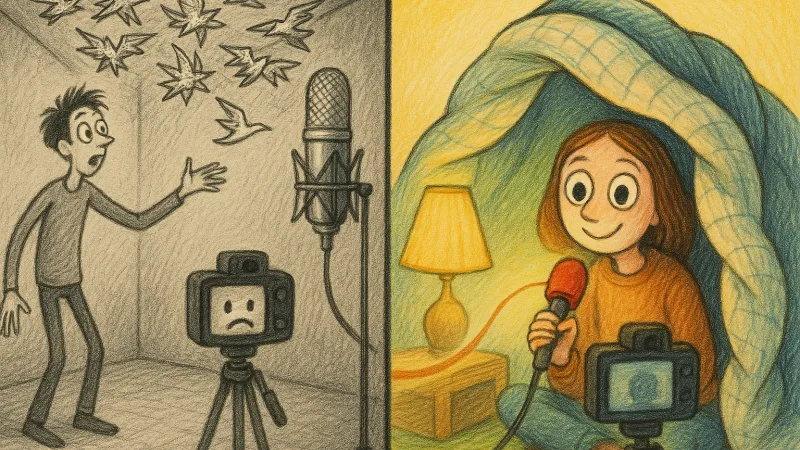
Viewers will forgive soft video long before they forgive bad sound. Most audio problems can be fixed with placement, a few blankets, and sensible levels.